About TDEE Calculator
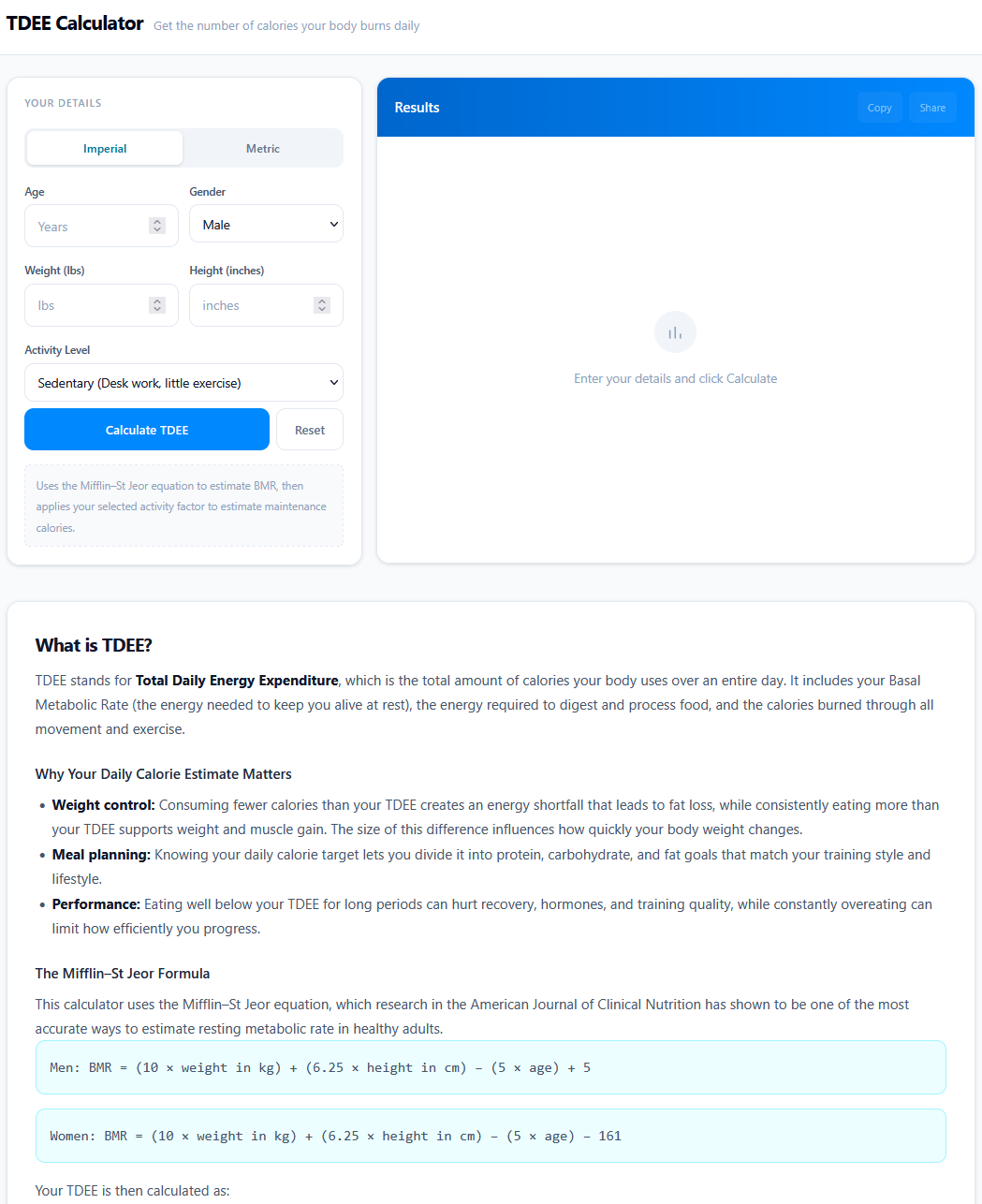
The TDEE Calculator is a practical and user-friendly tool designed to estimate how many calories your body burns in a full day, helping you better understand your energy needs and make informed decisions about nutrition, fitness, and overall health. By entering basic personal details such as age, gender, weight, height, and activity level, users can quickly receive a personalized estimate of their Total Daily Energy Expenditure (TDEE). This number represents the total calories your body uses over a 24-hour period, combining all essential bodily functions and physical activity.
At the core of the calculation is your Basal Metabolic Rate (BMR), which reflects the energy your body requires to maintain vital functions such as breathing, circulation, and temperature regulation while at rest. The calculator uses the widely recognized Mifflin–St Jeor equation to estimate BMR, a formula known for its accuracy in healthy adults. This equation takes into account your weight, height, age, and gender to provide a reliable baseline of your energy expenditure. Once BMR is calculated, it is multiplied by an activity factor that reflects your daily lifestyle, ranging from sedentary behavior to highly active or athletic routines.
TDEE is an essential concept for anyone looking to manage their weight effectively. When you consume fewer calories than your TDEE, your body enters a calorie deficit, which can lead to fat loss over time. On the other hand, consuming more calories than your TDEE creates a surplus that supports weight gain or muscle growth. The size of this deficit or surplus plays a key role in determining how quickly your body changes, making TDEE a valuable reference point for setting realistic goals.
In addition to weight control, understanding your TDEE can improve how you plan your meals. Once you know your daily calorie target, you can distribute those calories across macronutrients such as protein, carbohydrates, and fats based on your lifestyle and training goals. For example, someone focused on building muscle may prioritize higher protein intake, while someone engaged in endurance activities may need more carbohydrates for sustained energy.
The calculator also highlights the importance of balance when it comes to nutrition and performance. Consistently eating far below your TDEE can negatively impact recovery, hormone levels, and overall energy, while regularly overeating can slow progress and lead to unnecessary fat gain. By staying close to your estimated TDEE and adjusting gradually, you can maintain better control over your body composition and performance.
It is important to remember that TDEE is an estimate rather than an exact number. Individual differences in metabolism, genetics, and daily habits can influence actual calorie needs. For this reason, it is recommended to use the calculated value as a starting point and monitor your progress over time. By tracking changes in body weight over a few weeks, you can adjust your calorie intake slightly—typically by 100 to 200 calories—to better match your goals.
No reviews yet — be the first!
Discussion
Join the conversation
Sign in or create a free account to leave a comment.
Analytics
Unique visitor trends for TDEE Calculator
No comments yet. Be the first to share your thoughts!