
About xyOps
xyOps is a next-generation workflow automation system designed to help teams orchestrate and manage their entire infrastructure from a single, unified platform. It combines powerful capabilities such as job scheduling, real-time monitoring, alerting, and integrated ticketing into one cohesive solution, eliminating the need to rely on multiple disconnected tools. Built with scalability and flexibility in mind, xyOps allows organizations to streamline operations, automate repetitive processes, and maintain full visibility over their systems regardless of size or complexity.
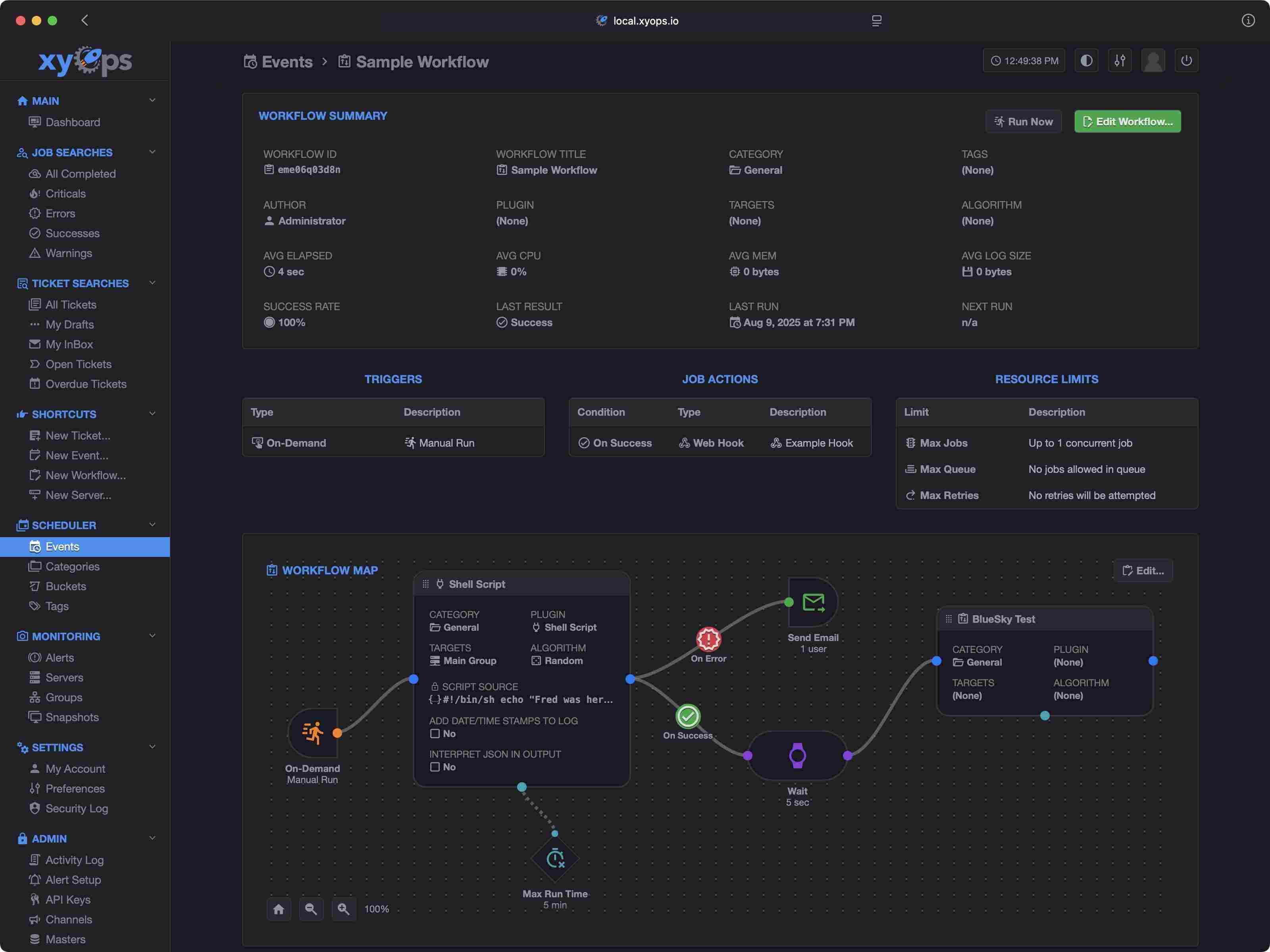
At its core, xyOps reimagines traditional job scheduling by going far beyond the limitations of standard cron-based systems. Users can create advanced workflows using a visual editor that connects events, triggers, actions, and monitoring conditions into structured pipelines. This graphical approach makes it easier to design complex automation processes without sacrificing control. Workflows can include conditional logic, parallel execution, custom queues, and the ability to pass data or files between steps, enabling highly dynamic and adaptable automation scenarios.
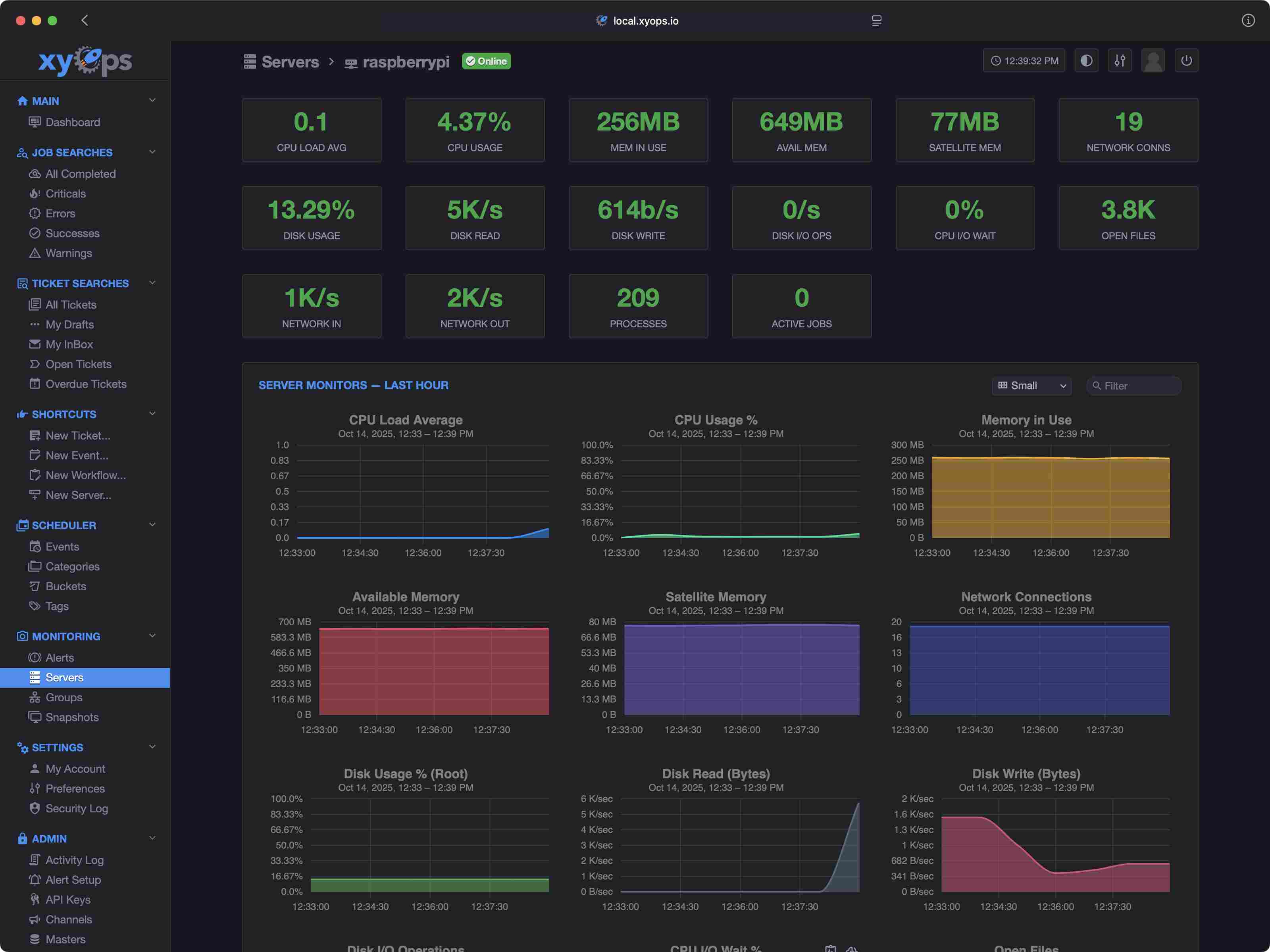
The platform also provides robust monitoring capabilities, allowing users to define exactly what they want to track across servers or groups of machines. Metrics such as CPU usage, memory consumption, network activity, and disk performance can be monitored in real time, alongside custom-defined metrics tailored to specific workloads. Historical performance data is available through detailed graphs, helping teams analyze trends and optimize system performance over time.
One of xyOps’ standout features is its intelligent alerting system. Alerts can be configured using flexible expressions and rules, ensuring that teams are notified immediately when something goes wrong. Notifications can be sent via email, webhooks, or custom channels, and each alert includes a snapshot of the affected system for quick diagnosis. Additionally, alerts can automatically trigger actions such as launching jobs or creating tickets, enabling faster incident response and reducing downtime.
To further support operational workflows, xyOps includes a built-in ticketing system that integrates seamlessly with alerts and job failures. This allows teams to manage incidents, attach relevant files, and even execute automated actions directly from tickets. The system is fully scriptable via API, making it easy to integrate with CI/CD pipelines and other development tools.
Designed to work across environments of any scale, xyOps can manage anything from a handful of servers to thousands of nodes in a distributed cluster. It supports redundancy through hot backups, ensuring that operations continue uninterrupted even in the event of a failure. Agents can be deployed on macOS, Linux, and Windows systems, making it a versatile solution for diverse infrastructures.
Finally, xyOps stands out for its developer-friendly approach and extensibility. It features a plugin-based architecture that allows users to create custom functionality using any programming language, thanks to a simple JSON-based API. With access to a growing plugin marketplace and support for integrations with popular services, xyOps empowers teams to tailor the platform to their exact needs while maintaining complete control over their infrastructure.
No reviews yet — be the first!
Discussion
Join the conversation
Sign in or create a free account to leave a comment.
Analytics
Unique visitor trends for xyOps
No comments yet. Be the first to share your thoughts!